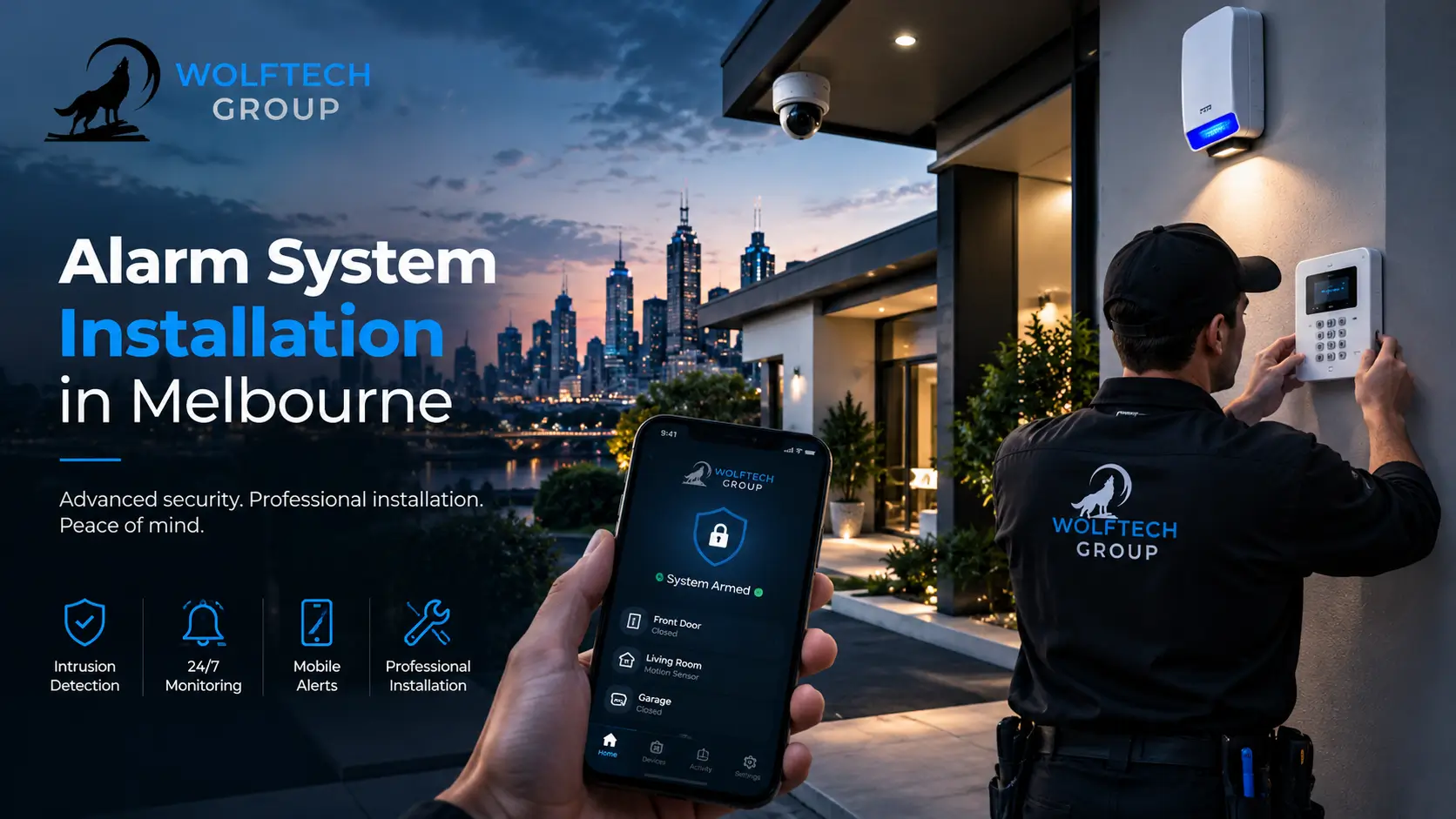
A break-in takes only a few minutes, but the stress can last for months. Most Melbourne property owners know this, yet many still wait until something goes wrong before they buy an alarm system. A good system changes that story. It makes noise when someone enters, sends an alert to your phone, and, if you choose, connects to a team that watches your property day and night. So, an alarm system installation is good for your property.
This guide explains alarm system installation in plain words. You will learn how alarms work, how wired and wireless systems differ, and which parts a complete system needs. You will also see how monitoring helps, how the process runs from the first visit to the final test, what affects the price, and which mistakes to avoid. Whether you own a home, a warehouse, or a shop, you will finish this article ready to make a smart choice.
What Is Alarm System Installation?
Alarm system installation is the complete job of planning, fitting, wiring, setting up, and testing a security alarm at a property. It covers much more than sticking a few sensors on a wall. A skilled installer studies your building, finds the weak points, picks the right equipment, and tests every part before leaving.
A good alarm has one simple goal. It detects a threat early and tells the right people fast. Sensors spot the problem, the control panel decides what to do, the siren makes noise, and your phone gets an alert. If you pay for monitoring, a trained team also receives the signal and can respond.
How an Alarm System Works
Think of an alarm as a small team. Sensors act as the eyes and ears. The control panel acts as the brain. The siren acts as the voice, and the keypad or phone app acts as the remote control. When you arm the system and someone opens a door or walks through a protected room, the sensor sends a signal to the panel. The panel checks the rules you set and then sounds the siren, sends an alert, or does both.
Why Melbourne Properties Need a Proper Alarm
Melbourne has busy suburbs, quiet streets, large industrial areas, and thousands of apartments. Each type of property faces different risks. A family home can sit empty during work and school hours. A warehouse can stay silent all night with stock inside. A shop can close at six and stay dark until morning.
An alarm helps in all three cases. It scares off many intruders because they do not want noise and attention. And it gives you early warning so you can act before a small problem grows. It also gives you peace of mind when you travel or work late. That is why professional alarm system installation is a smart first step for any owner who wants real protection.
Why Early Warning Matters
Without an alarm, you learn about a break-in after it ends. With an alarm, you learn about it while it happens. That gap matters. Early warning gives intruders less time inside, and it gives you more time to call for help.
Types of Alarm Systems: Wired, Wireless, and Hybrid
Before alarm system installation begins, you must choose a system type. The main choice is wired or wireless, and some properties use a mix of both. Each type has clear strengths and weaknesses.
Wired Alarm Systems
A wired alarm connects the control panel to every sensor, keypad, and siren with cables. The cables carry power and signals. Installers run them through walls, ceilings, and roof spaces, so the work is easiest in new builds and renovations.
Wired systems have strong advantages. The connection stays steady because signals travel through a cable and do not depend on radio waves. Sensors do not need regular battery changes. Large sites with many zones also suit this type. The main disadvantages are the extra labor for cabling and the harder job of moving devices later. Wired alarm system installation also takes more planning for this reason.
Wireless Alarm Systems
A wireless alarm uses radio signals instead of cables. Each sensor runs on its own battery and talks to the control panel through the air. Installers can fit the devices quickly because they do not need to open walls.
This type suits existing homes, apartments, and rentals. You can add or move sensors later with little effort. The trade-off is battery care. Batteries run low over time, so you need to replace them on schedule. Thick walls and metal structures can also weaken the signal, so a good installer tests the signal at every spot before fixing the device.
Hybrid Alarm Systems
A hybrid system mixes both methods. An installer might wire the main doors and the control panel, then use wireless sensors for hard-to-reach areas or future additions. Many Melbourne properties end up with a hybrid setup because it balances strength and flexibility.
Wired vs Wireless: Side-by-Side Comparison
| Feature | Wired | Wireless | Hybrid |
|---|---|---|---|
| Best for | New builds, renovations, large sites | Existing homes, apartments, rentals | Mixed or growing properties |
| Connection | Cable | Radio signal | Cable and radio |
| Sensor power | Comes from the panel | Batteries | Both |
| Installation effort | Higher needs cabling. | Lower, little or no cabling | Medium |
| Changing the layout later | Harder | Easier | Moderate |
| Maintenance | Low | Regular battery checks | Some battery checks |
An expert installer never pushes one type for every job. They look at your building first. That is why the free site survey matters so much.
Key Parts of a Complete Alarm System
A full system uses several parts that work together. Wolftech Groups installs intrusion detection sensors, perimeter and glass-break protection, smartphone push alerts, 24/7 monitoring integration, panic and duress buttons, and both wired and wireless options. Here is what each part does.
Control Panel and Keypad
The control panel is the brain of the system. It receives signals from every sensor and decides what to do. The keypad lets you arm and disarm the system with a code. Many systems also let you arm from a phone app, which saves time when you leave in a hurry.
Intrusion Detection Sensors
Sensors watch for signs of entry. Door and window contacts use two small parts, one on the frame and one on the door. When the two parts separate, the sensor sends a signal. Motion detectors pick up body heat and movement in a room, and people call them PIR sensors. Pet-friendly models ignore small animals, so your dog or cat does not trigger the alarm.
Placement matters as much as the device. A careful alarm system installation puts motion sensors where an intruder must pass, such as hallways and main rooms. A poor position leaves blind spots and causes false alarms. Direct sunlight, heaters, and air vents can also confuse a motion sensor, so installers keep sensors away from them.
Perimeter and Glass-Break Protection
Perimeter protection watches the outer edge of your property. It can include sensors on gates, outdoor motion detectors, and beams along a yard or fence line. It warns you before anyone reaches the building.
Glass-break sensors listen for the sound of breaking glass. Burglars often smash a window instead of opening it, and a door contact would miss that. A glass-break sensor closes the gap. Together, perimeter and glass-break protection help you detect threats before they escalate.
Sirens and Strobe Lights
A loud siren warns everyone nearby and scares off intruders. Installers fit an indoor siren and, in many cases, an outdoor one with a flashing light. The outdoor unit also tells neighbors and passers-by that something is wrong.
Panic and Duress Buttons
A panic button sends an alarm the moment you press it. Shops, offices, and homes use them in emergencies. A duress feature lets a person send a silent alert under threat. Installers place these buttons where people can reach them fast, such as behind a counter or beside a bed.
Smartphone Push Alerts
Push alerts send a message to your phone when the alarm triggers. You see the event wherever you are, so you can check the situation or call for help. Many systems also show which sensor fired, which helps you understand what happened.
Backup Power and Communication
A good system keeps working during a power cut. A backup battery in the control panel powers the system for a period after the mains fail. The system also needs a reliable way to send alerts, such as an internet or mobile connection. A smart installer tests both during handover.
24/7 Monitoring: Is It Worth It?
Monitoring means a professional team receives your alarm signal around the clock. It adds a human response to the technology. Wolftech Groups offers 24/7 monitoring integration as an option, so you decide what suits your property.
Self-Monitored vs Professionally Monitored
| Feature | Self-monitored | Professionally monitored |
|---|---|---|
| Who gets the alert? | You | You and a monitoring team |
| Works while you sleep or stay busy | Only if you notice the alert | Yes, someone watches all the time. |
| Response | You decide and make the calls. | The team checks and responds. |
| Best for | Low-risk homes | Businesses, empty properties, high-value sites |
| Extra cost | None | Ongoing fee that depends on the provider |
Alarm System Installation for Different Property Types
Every property has different needs. A smart plan starts with how you use the space.
Homes and Apartments
Home alarm system installation focuses on entry doors, ground-floor windows, and main living areas. Apartments need fewer sensors but often need strong phone alerts because owners travel or work away. Wireless systems often fit apartments well since they avoid cutting into walls. Families can also use a stay mode, which protects doors and windows at night while allowing movement inside.
Warehouses and Yards
Warehouses hold stock, tools, and vehicles, so they face higher risks. Alarm system installation for these sites leans on perimeter protection, door sensors on roller doors, and motion detection in storage areas. Large sites often use wired or hybrid systems because the distances run long. Monitoring adds real value here since nobody sits on site at night.
Commercial Premises
Shops and offices need protection after hours and safety tools during opening hours. Commercial alarm system installation often adds panic and duress buttons, several zones and monitoring. Zones let you arm the storeroom while staff still use the front area. Good planning also helps staff arm and disarm the system without delay.
Large and Multi-Site Facilities
Wolftech Groups secures sites of all sizes, from a single-family home to a multi-site government facility. Big sites need careful design, clear zoning and reliable communication. Alarm system installation at this scale usually combines a wired backbone with some wireless devices.
The Alarm System Installation Process, Step by Step
Knowing the steps helps you feel confident. Here is how a professional job runs.
Step 1: Free Site Survey and Design
The installer visits your property, checks doors, windows and access points, and asks how you use the space. Then they design a system around your property and budget. At Wolftech Groups, the site survey and design cost you nothing.
Step 2: A Clear Quote
You receive a free, no-obligation quote. It lists the equipment and the work, so you know exactly what you get before you decide.
Step 3: Installation, Cabling and Mounting
Licensed and insured installers fit the control panel, sensors, sirens and keypads. They run cables for the wired parts and mount every device. The job includes cabling and mounting, so you do not pay extra surprises later. A neat alarm system installation also looks tidy and keeps your walls in good shape.
Step 4: Configuration and Testing
The installer sets up zones, codes, alerts and monitoring. Then they test every sensor, siren and alert. They walk each room to check motion coverage and open each door and window to check the contacts.
Step 5: Demonstration and Training
A full demonstration shows you how to arm and disarm the system, read alerts and use the panic button. You leave knowing how everything works.
Step 6: Ongoing Support and Maintenance
Support does not end on handover day. Wolftech Groups offers ongoing support and maintenance, so you can ask for help whenever you need it.
Why Licensed and Insured Installers Matter
Alarm work mixes security skills with electrical skills. Poor work causes false alarms, dead zones and failures at the worst moment. Licensed installers know the rules and the safe methods. Insurance protects you if something goes wrong during the job.
Australian standards also matter. They set quality expectations for equipment and workmanship. Wolftech Groups follows Australian standards, so each alarm system installation stays compliant and quality-assured.
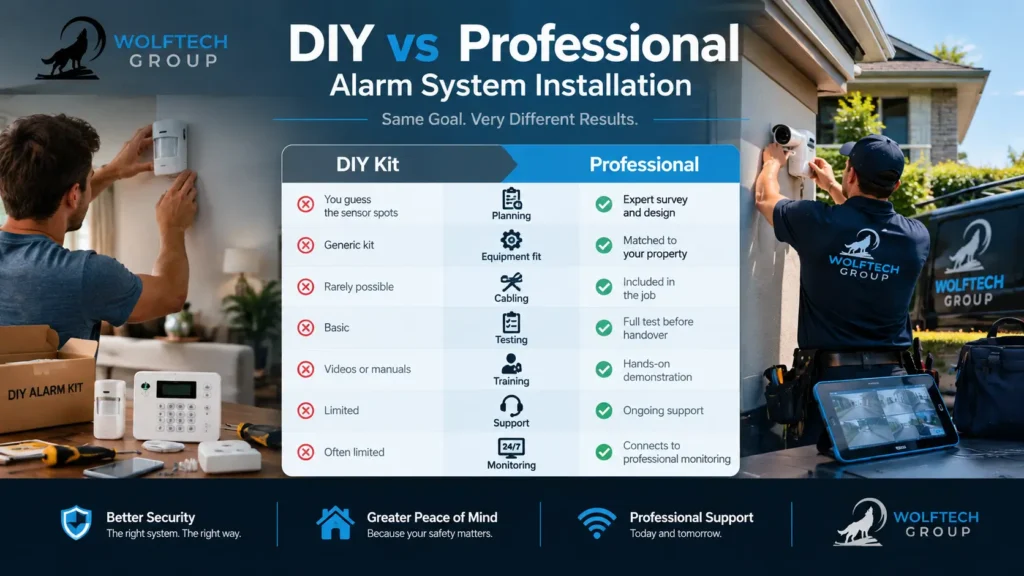
DIY vs Professional Alarm System Installation
| Factor | DIY kit | Professional |
|---|---|---|
| Planning | You guess the sensor spots | Expert survey and design |
| Equipment fit | Generic kit | Matched to your property |
| Cabling | Rarely possible | Included in the job |
| Testing | Basic | Full test before handover |
| Training | Videos or manuals | Hands-on demonstration |
| Support | Limited | Ongoing support |
| Monitoring | Often limited | Connects to professional monitoring |
Common Alarm System Installation Mistakes
Most failures in alarm system installation come from poor planning, not bad equipment. The table shows the mistakes people make most often and how to avoid them.
| Mistake | What goes wrong | How to avoid it |
|---|---|---|
| Fitting a system with no plan | Gaps appear that an intruder can use | Start with a site survey |
| Too few sensors | Large areas stay unprotected | Cover every entry point and main room |
| Ignoring the perimeter | You get a warning only after someone gets inside | Add perimeter protection |
| Poor sensor placement | Blind spots and false alarms | Keep sensors away from heaters, vents and direct sun |
| Skipping testing and training | You do not know if it works | Ask for a full test and demonstration |
| Forgetting batteries | Wireless sensors stop working | Check batteries on a schedule |
| Using an easy code | Anyone can guess it | Pick a code that others cannot guess |
Expert Tips for a Stronger Alarm System
These tips come from the way professionals plan every job.
Protect the Entry Points First
Most intruders use the front door, back door or a ground-floor window. Start there, then add inside sensors for a second layer.
Build Layers
One sensor type never covers every risk. Combine door contacts, motion sensors, glass-break detection and perimeter protection. When one layer fails, another still catches the threat.
Plan for Pets and Family Habits
Tell your installer about pets, night routines and work hours. They can choose pet-friendly sensors and set stay modes that fit how you live.
Share Alert Access Wisely
Decide who receives alerts. A partner, a trusted neighbour or a business manager can help when you cannot respond. Keep the list short and update it when people change.
What Affects Alarm System Installation Cost
Every property is different, so a fair quote needs a site visit. Several factors change the final price.
| Factor | How it affects the cost |
|---|---|
| Size of the property | Bigger sites need more sensors and cabling |
| Wired or wireless | Cabling adds labour, wireless adds battery devices |
| Number of sensors | Extra rooms, doors and windows need extra devices |
| Extras | Perimeter protection, glass-break sensors and panic buttons add equipment |
| Monitoring | Optional, and the cost depends on the service you pick |
| Property type | Commercial and multi-site jobs need more design time |
Wolftech Groups offers a free, no-obligation quote and site survey. Our licensed specialists design a solution around your property and budget, so you pay only for what you need.
Maintenance Tips After Alarm System Installation
A good alarm needs light care to stay reliable. Test the system once a month by triggering a sensor and checking the siren and phone alert. Replace batteries in wireless devices before they run out. Wipe dust from motion sensors with a dry cloth, and keep furniture from blocking their view.
Change your code when someone leaves your household or business. Review your system after a renovation or an office move, because new walls and doors can create gaps. Finally, book professional maintenance when you notice repeated faults or false alarms.
How to Choose an Alarm Installer in Melbourne
The installer matters as much as the equipment. Start by checking that the company holds the right licence and insurance. Ask whether they offer a free site survey and a written quote. Make sure they install both wired and wireless systems, so they recommend what fits your building and not what they prefer to sell.
Ask about training, testing and support after the job. A strong company stays available when you have questions. Look for a team that follows Australian standards and offers complete alarm system installation from design to demonstration. A clear answer to each of these points tells you a lot about the company.
Related Article: Static Security Guards in Melbourne: Protect Your Site 24/7
Frequently Asked Questions
How Long Does Alarm System Installation Take?
The time depends on the size of the property and the type of system. A small home usually takes less time than a large warehouse. A wireless system often goes in faster than a wired one. Your installer confirms the timing after the site survey.
Is a Wired or Wireless Alarm Better?
Neither type wins in every case. Wired alarms suit new builds and large sites. Wireless alarms suit existing homes and apartments. A hybrid system suits properties that need both strength and flexibility.
Do I Need 24/7 Monitoring?
Monitoring is optional. It helps most when nobody stays on site, when you travel often, or when your property holds valuable stock. You can add it at installation or connect it later.
Can I Control My Alarm From My Phone?
Your system can send push alerts straight to your phone, so you always know what happens at your property. Many systems also let you arm and disarm through an app.
Will My Pets Set Off the Alarm?
Not if you choose the right sensors. Pet-friendly motion detectors ignore small animals. Tell your installer about your pets during the site survey.
What Happens to the Alarm During a Power Cut?
A backup battery keeps the control panel running for a period after the mains fail. Your installer tests this during handover.
Can I Add More Devices Later?
Yes. Wireless systems make this easy, and many wired systems also accept extra devices. Plan for growth during the first design.
Does Wolftech Groups Install Alarms for Businesses?
Yes. The team works with homes, apartments, warehouses, yards, commercial premises and large government facilities.
Is the Site Survey Really Free?
Yes. Wolftech Groups offers a free site survey and design, followed by a no-obligation quote.
Conclusion
A strong alarm does not start with equipment. It starts with a plan that fits your property. The right alarm system installation covers every entry point, protects the perimeter, sends alerts to your phone and connects to 24/7 monitoring when you want it. Licensed and insured installers make sure it all works on the day you need it.
Choose wired when you build or renovate, choose wireless when you want a faster and cleaner job, and choose hybrid when your property needs both. Add layers, test often and keep your system maintained. These simple habits turn a basic alarm into real protection for your family, your stock or your business.
Ready to protect your property? Wolftech Groups offers professional alarm system installation for homes, apartments, warehouses and commercial sites in Melbourne. Call 03 7067 3394 or email info@wolftechgroups.com.au to book your free site survey and quote.